




Explore Plans

Google Nest Thermostat to Webhooks integrations

Connect your Google Nest Thermostat to Webhooks, and you can trigger thermostat changes from any device or app that sends a web request. Control your heating, cooling, and fan from custom hardware, third-party platforms, or automation tools that speak HTTP.
Get started todayGet started today

Automate Google Nest Thermostat and Webhooks from your AI assistant

Ask OpenClaw to create Google Nest Thermostat applets for you, right from your AI assistant, with IFTTT MCP.

Set up IFTTT MCP

Create your own Google Nest Thermostat and Webhooks workflow

Create custom workflows effortlessly by selecting triggers, queries, and actions. With IFTTT, it's simple: “If this” trigger happens, “then that” action follows. Streamline tasks and save time with automated workflows that work for you.

19 triggers, queries, and actions

Humidity drops below

Polling trigger
Polling Applets run after IFTTT reaches out to the trigger service and finds a new trigger event. These trigger checks occur every hour on Free, every 15 minutes on Starter, and every 5 minutes on Pro and Pro+.
This trigger fires when the humidity drops below a given threshold.

Humidity rises above

Polling trigger
Polling Applets run after IFTTT reaches out to the trigger service and finds a new trigger event. These trigger checks occur every hour on Free, every 15 minutes on Starter, and every 5 minutes on Pro and Pro+.
This trigger fires when the humidity rises above a given threshold.

Receive a web request

Polling trigger
Polling Applets run after IFTTT reaches out to the trigger service and finds a new trigger event. These trigger checks occur every hour on Free, every 15 minutes on Starter, and every 5 minutes on Pro and Pro+.
This trigger fires every time the Webhooks service receives a web request to notify it of an event. To find your webhook URL and key, open Documentation on the Webhooks service page (mobile: Account > My services > Webhooks).

Receive a web request with a JSON payload

Polling trigger
Polling Applets run after IFTTT reaches out to the trigger service and finds a new trigger event. These trigger checks occur every hour on Free, every 15 minutes on Starter, and every 5 minutes on Pro and Pro+.
This trigger fires every time the Webhooks service receives a web request to notify it of an event. To find your webhook URL and key, open Documentation on the Webhooks service page (mobile: Account > My services > Webhooks).

Temperature drops below

Polling trigger
Polling Applets run after IFTTT reaches out to the trigger service and finds a new trigger event. These trigger checks occur every hour on Free, every 15 minutes on Starter, and every 5 minutes on Pro and Pro+.
This trigger fires when the temperature drops below a given threshold.

Temperature rises above

Polling trigger
Polling Applets run after IFTTT reaches out to the trigger service and finds a new trigger event. These trigger checks occur every hour on Free, every 15 minutes on Starter, and every 5 minutes on Pro and Pro+.
This trigger fires when the temperature rises above a given threshold.

History of web requests received

Query
A query lets your Applet retrieve extra data that isn't included in the trigger, so that your automation can include more complete or useful information.
This query returns a list of times the Webhooks service received a web request to notify it of an event. To find your webhook URL and key, open Documentation on the Webhooks service page (mobile: Account > My services > Webhooks).

Make a web request

Query
A query lets your Applet retrieve extra data that isn't included in the trigger, so that your automation can include more complete or useful information.
This query returns the status code from a request made to the provided URL. If the response body is in the correct format it will also return the body’s extracted values. Please see the documentation link on the Webhooks service page.

Make a web request with JSON response

Query
A query lets your Applet retrieve extra data that isn't included in the trigger, so that your automation can include more complete or useful information.
This query returns the JSON response body. You can use filter code to parse it. Please see the documentation link on the Webhooks service page.

Make a web request

Action
An action is the task your Applet carries out after the trigger occurs. It defines what happens as the result of your automation and completes the workflow.
This action will make a web request to a publicly accessible URL. NOTE: Requests may be rate limited.

Set COOL temperature

Action
An action is the task your Applet carries out after the trigger occurs. It defines what happens as the result of your automation and completes the workflow.
This action will set the desired temperature in the COOL mode.

Set HOT temperature

Action
An action is the task your Applet carries out after the trigger occurs. It defines what happens as the result of your automation and completes the workflow.
This action will set the desired temperature in the HOT mode.

Set temperature range

Action
An action is the task your Applet carries out after the trigger occurs. It defines what happens as the result of your automation and completes the workflow.
This action will set the desired temperature HEAT & COOL mode range.

Turn off Eco Mode

Action
An action is the task your Applet carries out after the trigger occurs. It defines what happens as the result of your automation and completes the workflow.
This action will turn off your thermostat's Eco Mode. When the Eco mode is turned off, the thermostat mode will default to the last standard mode (HEAT, COOL, HEATCOOL, or OFF) that was active.

Turn off fan

Action
An action is the task your Applet carries out after the trigger occurs. It defines what happens as the result of your automation and completes the workflow.
This action will turn off your thermostat's fan.

Turn on Eco Mode

Action
An action is the task your Applet carries out after the trigger occurs. It defines what happens as the result of your automation and completes the workflow.
This action will turn on your thermostat with Eco Mode.

Turn on fan

Action
An action is the task your Applet carries out after the trigger occurs. It defines what happens as the result of your automation and completes the workflow.
This action will turn on your thermostat's fan for X minutes.

Turn thermostat off

Action
An action is the task your Applet carries out after the trigger occurs. It defines what happens as the result of your automation and completes the workflow.
This action will turn off your thermostat.

Turn thermostat on

Action
An action is the task your Applet carries out after the trigger occurs. It defines what happens as the result of your automation and completes the workflow.
This action will turn on your thermostat.

History of web requests received

Query
A query lets your Applet retrieve extra data that isn't included in the trigger, so that your automation can include more complete or useful information.
This query returns a list of times the Webhooks service received a web request to notify it of an event. To find your webhook URL and key, open Documentation on the Webhooks service page (mobile: Account > My services > Webhooks).

Humidity drops below

Polling trigger
Polling Applets run after IFTTT reaches out to the trigger service and finds a new trigger event. These trigger checks occur every hour on Free, every 15 minutes on Starter, and every 5 minutes on Pro and Pro+.
This trigger fires when the humidity drops below a given threshold.

Humidity rises above

Polling trigger
Polling Applets run after IFTTT reaches out to the trigger service and finds a new trigger event. These trigger checks occur every hour on Free, every 15 minutes on Starter, and every 5 minutes on Pro and Pro+.
This trigger fires when the humidity rises above a given threshold.

Make a web request

Query
A query lets your Applet retrieve extra data that isn't included in the trigger, so that your automation can include more complete or useful information.
This query returns the status code from a request made to the provided URL. If the response body is in the correct format it will also return the body’s extracted values. Please see the documentation link on the Webhooks service page.

Make a web request

Action
An action is the task your Applet carries out after the trigger occurs. It defines what happens as the result of your automation and completes the workflow.
This action will make a web request to a publicly accessible URL. NOTE: Requests may be rate limited.

Make a web request with JSON response

Query
A query lets your Applet retrieve extra data that isn't included in the trigger, so that your automation can include more complete or useful information.
This query returns the JSON response body. You can use filter code to parse it. Please see the documentation link on the Webhooks service page.

Receive a web request

Polling trigger
Polling Applets run after IFTTT reaches out to the trigger service and finds a new trigger event. These trigger checks occur every hour on Free, every 15 minutes on Starter, and every 5 minutes on Pro and Pro+.
This trigger fires every time the Webhooks service receives a web request to notify it of an event. To find your webhook URL and key, open Documentation on the Webhooks service page (mobile: Account > My services > Webhooks).

Receive a web request with a JSON payload

Polling trigger
Polling Applets run after IFTTT reaches out to the trigger service and finds a new trigger event. These trigger checks occur every hour on Free, every 15 minutes on Starter, and every 5 minutes on Pro and Pro+.
This trigger fires every time the Webhooks service receives a web request to notify it of an event. To find your webhook URL and key, open Documentation on the Webhooks service page (mobile: Account > My services > Webhooks).

Set COOL temperature

Action
An action is the task your Applet carries out after the trigger occurs. It defines what happens as the result of your automation and completes the workflow.
This action will set the desired temperature in the COOL mode.

Set HOT temperature

Action
An action is the task your Applet carries out after the trigger occurs. It defines what happens as the result of your automation and completes the workflow.
This action will set the desired temperature in the HOT mode.

Set temperature range

Action
An action is the task your Applet carries out after the trigger occurs. It defines what happens as the result of your automation and completes the workflow.
This action will set the desired temperature HEAT & COOL mode range.

Temperature drops below

Polling trigger
Polling Applets run after IFTTT reaches out to the trigger service and finds a new trigger event. These trigger checks occur every hour on Free, every 15 minutes on Starter, and every 5 minutes on Pro and Pro+.
This trigger fires when the temperature drops below a given threshold.

Build an automation in seconds!

You can add delays, queries, and more actions in the chat.
GET STARTED

How to connect to a Google Nest Thermostat automation

Find an Applet using Google Nest Thermostat and Webhooks

Find an automation to connect to, or create your own!

Connect IFTTT to your accounts

Securely connect the Applet services to your respective accounts.

Finalize and customize your Applet

Review trigger and action settings, and click connect. Simple as that!
Get started

Make more happen with your credits

  • Connect to more Applets

    More credits, more possibilities

    Get more credits per month to power more automation activity.
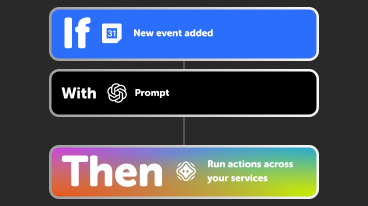
  • If a new calendar event is added, with an AI prompt, then an AI agent runs actions across your services

    Power more advanced automations

    Use credits to power your automations, including actions that require more processing.
  • Get access to faster speeds

    Access faster speeds and higher rate limits

    Get faster updates and more actions with increased rate limits and more frequent checks.

More on Google Nest Thermostat and Webhooks

About Google Nest Thermostat

Google Nest Thermostat and IFTTT let you automate your heating and cooling based on temperature and humidity changes.
Explore Google Nest Thermostat

More integrations with Google Nest Thermostat

About Webhooks

Webhooks and IFTTT let you connect any device or app that speaks HTTP to over 1000 services, creating automations between your custom projects and the apps you use.
Explore Webhooks

More integrations with Webhooks

IFTTT helps all your apps and devices work better together

Get started for free